Why Coaching Matters: The Difference Between a Surf Instructor and a Surf Coach

Why Coaching Matters: The Difference Between a Surf Instructor and a Surf Coach
5 minute read
At SurfLife, we don’t just teach surfing.
We coach people through the process of learning how to surf.
And there’s a difference.
Anyone can stand on the beach and say:
“Paddle harder.”“Pop up faster.”“Look where you want to go.”
That’s instruction.
Coaching is something deeper.
Coaching is understanding how someone learns, what fears they carry into the water, how they process information, and what kind of support helps them grow—not just as a surfer, but as a person stepping into something uncomfortable and new.
The ocean has a funny way of teaching us about ourselves.
And everybody learns differently.
At some point, I realized this became more than teaching surfing.
It started feeling like a calling.
Like something I was put on this earth to do.
Not just helping people stand up on a surfboard—but helping them build confidence, face fear, trust themselves, and feel like they belong in the ocean.
Maybe that sounds philosophical.
But when you spend enough time in the water, you realize surfing teaches lessons far beyond waves.
And coaching people through that process? That means something to me.
Before We Even Paddle Out, I’m Learning About You
At SurfLife, coaching starts before we ever touch the water.
About 24 hours before your lesson, I’ll usually give you a call.
Sure, we’ll go over the practical stuff:
Where we’re meeting (the picnic tables near the Short Sands trailhead), what the forecast and conditions are looking like, wetsuit questions, timing, expectations, and anything else you’re wondering about.
But that call is also about making sure we’re on the same page.
I want to know:
Have you surfed before?
What are your goals?
Are you nervous?
Excited?
Do you want to ease into it or push yourself?
That first conversation matters.
Good coaching begins with understanding the person.
Not just the surfer.
Everybody Learns Differently
One thing I’ve learned over the years is this:
No two surfers learn the same way.
As we walk down the trail to Short Sands, I’ll usually ask a few questions and pay attention to how you process information.
Because everybody has different learning preferences.
Some people are visual learners.
They want to watch first.
They learn by seeing movement, body positioning, timing, and technique before trying it themselves. For these surfers, demonstrations matter.
Others are more hands-on learners.
They don’t want a long lecture.
They want reps.
They learn by doing. By paddling. Falling. Laughing. Adjusting. Trying again.
Then there are analytical learners.
These surfers want the “why.”
Why this tide?
Why this wave?
Why are we paddling here?
Why does timing matter?
For them, understanding the ocean builds confidence.
And some surfers simply need encouragement and calmness.
Let’s be honest—surfing can feel overwhelming at first.
Cold water.
Waves moving everywhere.
Saltwater in your face.
Adrenaline.
Sometimes the best coaching is simply helping someone slow down, breathe, trust themselves, and realize they’re doing better than they think.
Most people are a mix.
And that’s the point.
A good coach doesn’t force every student into the same system.
A coach adapts.

An Instructor Gives Information. A Coach Builds Confidence
The simplest way I can explain it is this:
An instructor teaches surfing.
A coach teaches you how to learn surfing.
There’s science behind it, sure.
But there’s also something deeply human about it.
The ocean is unpredictable.
And for beginners, surfing can feel chaotic.
A good coach teaches calmness in chaos.
Composure in calamity.
A coach has emotional intelligence.
They can read where someone is mentally—not just physically.
Some surfers need challenge.
Some need reassurance.
Some need confidence.
Some need somebody to slow things down and remind them:
“Hey, you’re actually doing great.”
Because learning to surf isn’t only physical.
It’s emotional too.
Part of my job as a coach is helping people believe they belong out there.
Reflection Matters
At the end of every SurfLife lesson, I don’t rush people out.
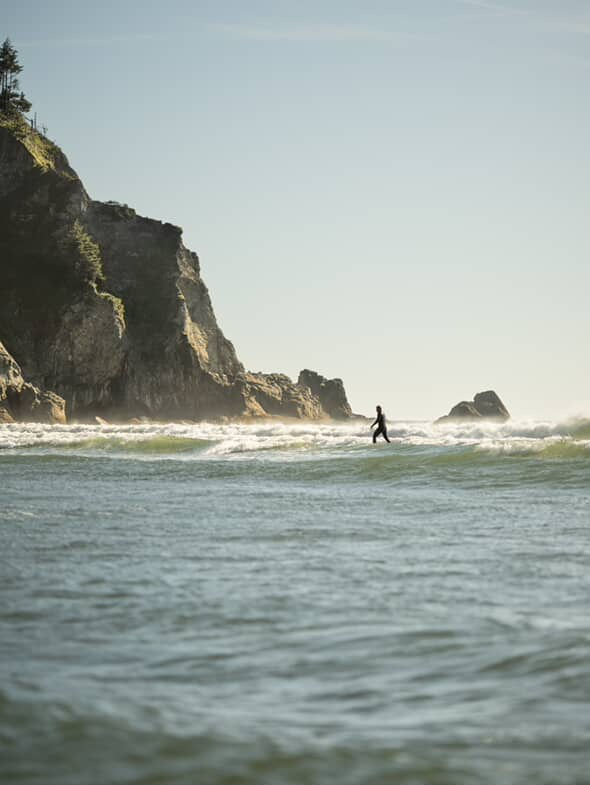
When we’re done, I usually encourage students to spend about 5–10 minutes in the ocean by themselves while I’m cleaning up gear and getting ready to head out.
No pressure.
No coaching.
Just time.
Time to breathe.
Reflect.
Look around.
Take in the moment.
Sometimes people caught their first wave.
Sometimes they struggled.
Sometimes they surprised themselves.
But reflection matters.
Because the ocean teaches.
And often, growth happens in quiet moments.

Your Progress Doesn’t End When the Lesson Ends
At SurfLife, coaching doesn’t stop when the lesson ends.
A few days later, we send a simple follow-up progress report.
Think of it like a surf report card.
We’ll go over:
What you did really well
What to keep practicing
What to focus on before your next lesson
Little adjustments that can help you progress faster
The goal isn’t perfection.
The goal is progress.
Surfing is hard.
But it becomes a whole lot easier when someone helps guide the process.
And if you ever have questions after your lesson?
Text me.
Call me.
Want advice on a wetsuit?
Trying to figure out where to surf?
Need help understanding conditions?
I’m here.
Because I don’t see this as just teaching a lesson.
I see it as coaching.
Helping people coast like a local. (And maybe surf like one)
Build confidence.
Find calm in chaos.
And maybe—if the ocean speaks to you the way it spoke to me—
Learn something about yourself along the way.

Comments