How to Paddle in Surfing Without Getting Exhausted

A Beginner Guide to Catching Waves and Getting Past the Whitewater at Short Sands Beach, Oregon Coast
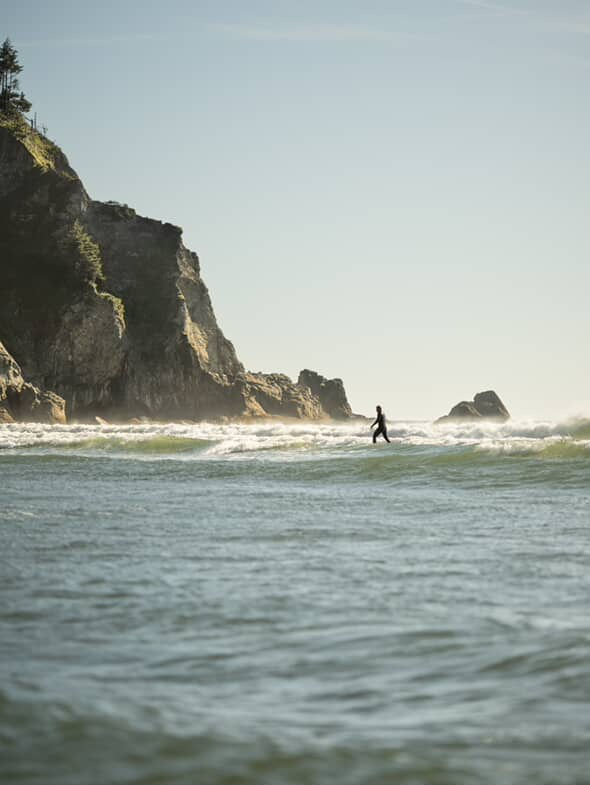
Short Sands Beach inside Oswald West State Park is one of the most popular places to learn surfing on the Oregon Coast. Almost every new surfer experiences the same surprise — paddling feels harder than standing up. This guide explains why surfing feels exhausting at first, how to conserve your energy, how to read the ocean, and how to get past the whitewater so you can actually reach waves comfortably.
Surfing Is Mostly About Saving Energy
Many people imagine surfers constantly paddling hard.
They aren’t.
The ocean moves in pulses. Waves arrive in groups followed by quieter periods. Experienced surfers spend a lot of time watching and waiting instead of moving nonstop.
Beginners try to move all the time. Every wave feels urgent, so they paddle urgently. After a short time their arms feel heavy and breathing becomes difficult.
Surfing becomes much easier when you understand you are not supposed to work the entire session.
You are supposed to work at the right moment.
When You Actually Use Power
You do need strength in surfing.
Just not all the time.
There is a short moment right before a wave lifts your board when you need real effort. Those last few paddle strokes must match the speed of the wave. That is when you paddle at full power.
Everything before that should be controlled and steady.
If you spend your energy fighting every wave on the way out, your heart rate climbs too high and you will not have power left when the wave finally arrives.
Surfing is mostly conservation, followed by a very brief burst of effort.

Controlling Your Breathing and Heart Rate
One of the hidden skills in surfing is recovery.
When beginners get nervous or rushed, they paddle faster and faster. Breathing speeds up, shoulders tighten, and exhaustion comes quickly. Once your heart rate climbs too high, it is difficult to recover and every wave afterward feels harder.
Experienced surfers constantly reset.
They sit up on the board. They slow their breathing. They watch the horizon.
You are allowed to rest in the water. In fact, you should. Surfing feels exhausting when treated like a sprint. It becomes manageable when treated like steady movement with short efforts. How to Paddle in Surfing Without Getting Exhausted
Positioning on the Board
Where you lie on the board determines how much effort paddling requires.
The board should sit naturally in the water. When positioned correctly, it glides forward easily.
If you are too far back, the nose lifts and the board pushes water. Every stroke feels heavy.
If you are too far forward, the nose dives and waves stop you.
Often the solution is small. Slide forward or back a few inches. These small adjustments dramatically reduce effort.
Proper Paddling Posture
Good paddling is smooth and quiet.
Keep your chest lifted and shoulders upright so the board moves across the surface rather than through it. A slightly lifted upper body reduces drag and allows the board to glide.
Keep your feet resting on the board instead of hanging in the water. Legs dragging behind you act like an anchor and slow you down more than most beginners realize.
Sometimes leaning slightly back while paddling helps keep the board level and moving freely.
You are not trying to muscle the water. You are trying to move cleanly through it.
Why Beginners Get Stuck in the Whitewater
A very common experience at Short Sands Beach goes like this:
You ride a wave toward shore, turn around, and suddenly every wave pushes you back. It feels impossible to reach the outside.
Most people assume they need to paddle harder.
Usually the opposite is true.
Beginners often paddle straight back out during the most active wave period and directly into breaking waves. They also tense up when whitewater approaches. When the body stiffens and breathing speeds up, the wave stops you immediately.
Relaxing your body and choosing a better path makes a much bigger difference than strength.
Reading the Ocean to Get Outside
Getting past the whitewater is often about observation, not effort.
Waves do not break evenly across the beach. There are calmer paths called channels — areas where water flows back toward the ocean. Experienced surfers look for these before entering the water.
Stand on the beach and watch for a minute.
Look for areas where waves are consistently crashing in a line. Then look next to those areas. You will often see a section where waves appear softer, uneven, or barely breaking at all. The surface may look darker or smoother.
That is usually a deeper spot and a better place to paddle out.
Low spots in the sandbar, sections where waves are not cresting, and gentle outward-moving water can help you reach the outside with much less effort. Instead of paddling straight through the strongest waves, you move slightly around them.
You are not trying to go through the surf.You are trying to go around the part where waves are breaking.
Watch first, choose your path, and then move during a calmer moment.
Patience saves more energy than strength.
Fitness Helps — But Efficiency Helps More
You do not need to be an elite athlete to surf, but preparation helps.
The most useful preparation includes:
steady cardio enduranceshoulder mobilityflexibilitycontrolled breathing
Swimming, hiking, stretching, and moderate cardio help more than trying to overpower the ocean. Strength is useful for the final paddle into a wave, but endurance and relaxation matter for the rest of the session.
Surfing rewards sustainable effort more than raw power.
The Real Key
Surfing becomes easier when you realize this:
Most of the session is conserving energy.Only a few seconds require full effort.
Good surfers wait, observe, breathe, and adjust their position. Then, when the wave arrives, they give a short burst of power and let the ocean carry them.
Once you stop fighting every wave and start moving with the water, the experience changes completely.
Surfing at Short Sands Beach
Short Sands Beach is a protected cove on the Oregon Coast, which makes it an excellent place for beginner and intermediate surfing lessons. The same geography that makes it safe also creates frequent whitewater, which is why timing, positioning, and relaxation are so important.
Learning to paddle efficiently often matters more than learning to stand up. When paddling becomes easier, catching waves becomes easier, and sessions become longer and more enjoyable.
Learn More About Lessons
SurfLife Surf School offers private and small-group surfing lessons at Short Sands Beach in Oswald West State Park. We focus on helping surfers feel comfortable in the ocean first, which naturally leads to more waves and a better overall experience.


Comments